Group Members
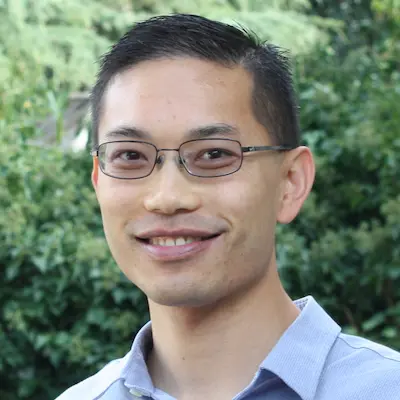
Kevin Chu, Ph.D.
Projects: PXRD, Quantitative Spectrometry, OTS-NIDC
Research Interests: applied mathematics, computational science & engineering, data science, machine learning, artificial intelligence, scientific software development, scientific/engineering/business applications
Website: https://ktchu.github.io
LinkedIn: https://www.linkedin.com/in/kevin-chu/
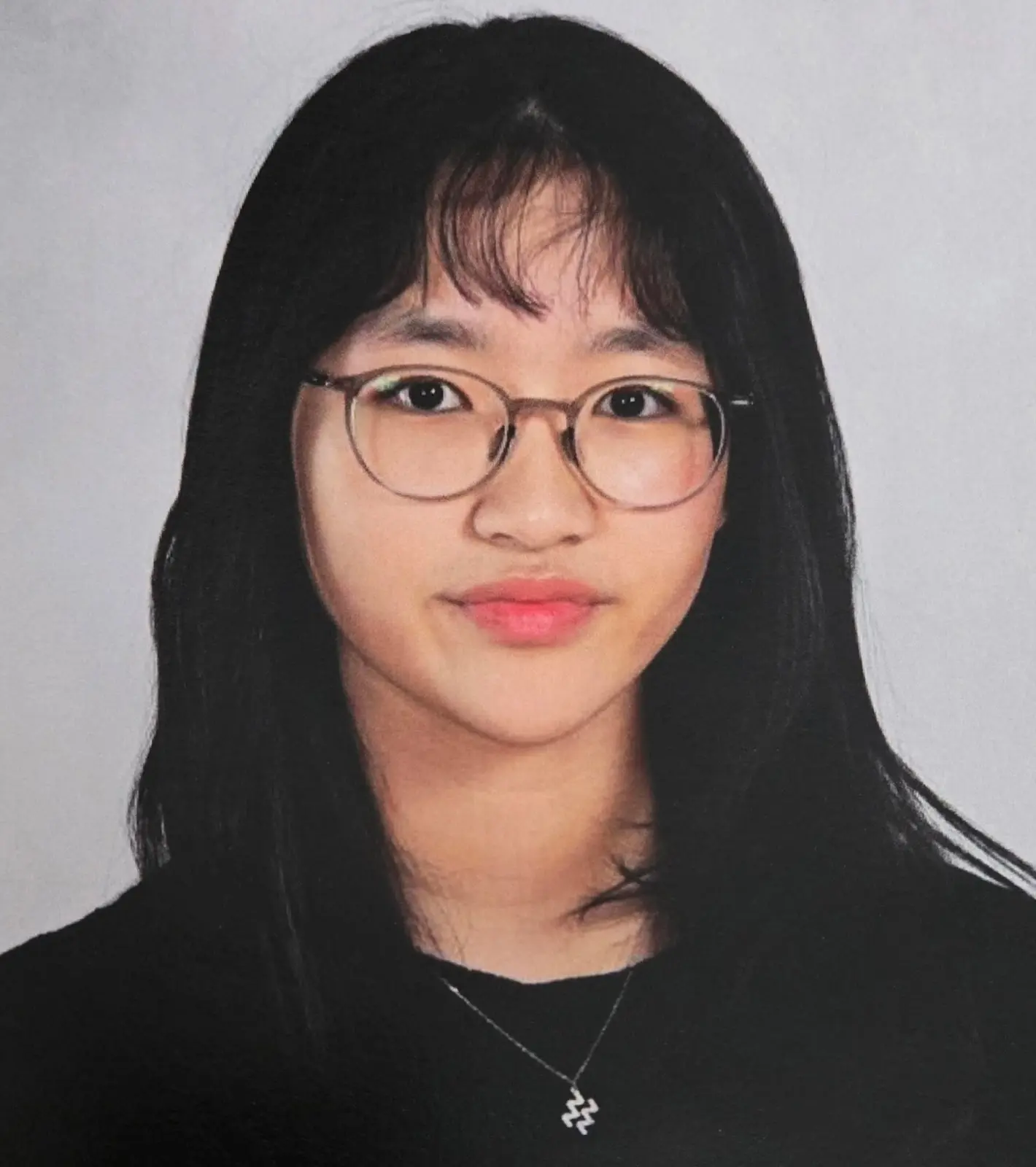
Jaylin Park
Velexi Research Scholar / IMSA Summer Research and Experiental Learning Opportunities / IMSA Student Inquiry and Research (2026-2027)
Mentor(s): Kevin Chu
Project: Learning Color Spaces for Modern Environments
This project compares the color characteristics of natural and modern scenes to understand how they differ and explore alternative color spaces for modern environments. Using Independent Component Analysis (ICA) implemented in Python, images from both types of environments were analyzed to identify statistically independent color axes. To run experiments and analyze the images, a software tool that allows users to load image datasets, perform ICA, and analyze results was developed.
High School: Illinois Mathematics and Science Academy (IMSA)
Research Interests: cognitive science, psychology, human-computer interaction, artificial intelligence, machine learning, mathematics, philosophy
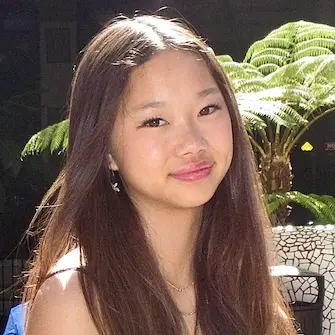
Vienna Chu
Velexi Research Scholar (2026)
Mentor(s): Kevin Chu
Project: Exploring Optimal Vision Receptor Layouts
When thinking about the layout of receptors in eyes and cameras, we don't often consider the advantages and disadvantages of different receptor layouts. In this project, I study the implied coordinate systems of image capture systems and explore their optimality in various contexts.
High School: Burlingame High School

Aditya Tiwari
Velexi Research Scholar (2026)
Mentor(s): Kevin Chu
Project: Coupled and Stochastic Partial Differential Equations with OTS-NIDC
OTS-NIDC is a process running atop a simple finite difference (FD) scheme for solving partial differential equations (PDEs) that selects an optimal time step for a specific grid space such that the order of accuracy jumps from second order to fourth order. This optimal time step, however, is particular to a specific scalar differential equation as it depends on the specific diffusion coefficient for each equation, and fails to bring similar orders of improvement to coupled equations. This project works to extend this in two specific ways. The first is bringing OTS-NIDC to coupled Reaction-Diffusion (RD) equations using subcycling. The second is bringing OTS-NIDC to stochastic PDEs by using Ito moment closure.
Undergraduate Studies: Duke University
High School: Illinois Mathematics and Science Academy (IMSA)